
At annual conferences across any vertical, AI has become the default lens for discussing modernization. Fintech Americas Miami 2026 was no exception. At the event, every conversation about banking modernization, core systems, customer experience, and risk management was being reframed through AI‑driven modernization and agentic workloads.
The conference highlighted a clear tension: banks want to modernize with AI, but they must do so inside legacy systems, strict regulations, and risk‑sensitive environments. COBOL‑based cores, siloed data, and compliance requirements are not going away. At the same time, institutions are being pushed to adopt AI‑native workflows, production‑ready agents, and trustworthy AI infrastructure.
The real challenge is not simply adding AI. It is making AI work safely and reliably where mistakes can have real operational, financial, and regulatory consequences.
This post unpacks the key themes from Fintech Americas surrounding AI Modernization for Banking, from understanding legacy systems and trustworthy AI to eval‑driven agent design and the role of AI‑enabled teams that can move beyond pilots and into production.
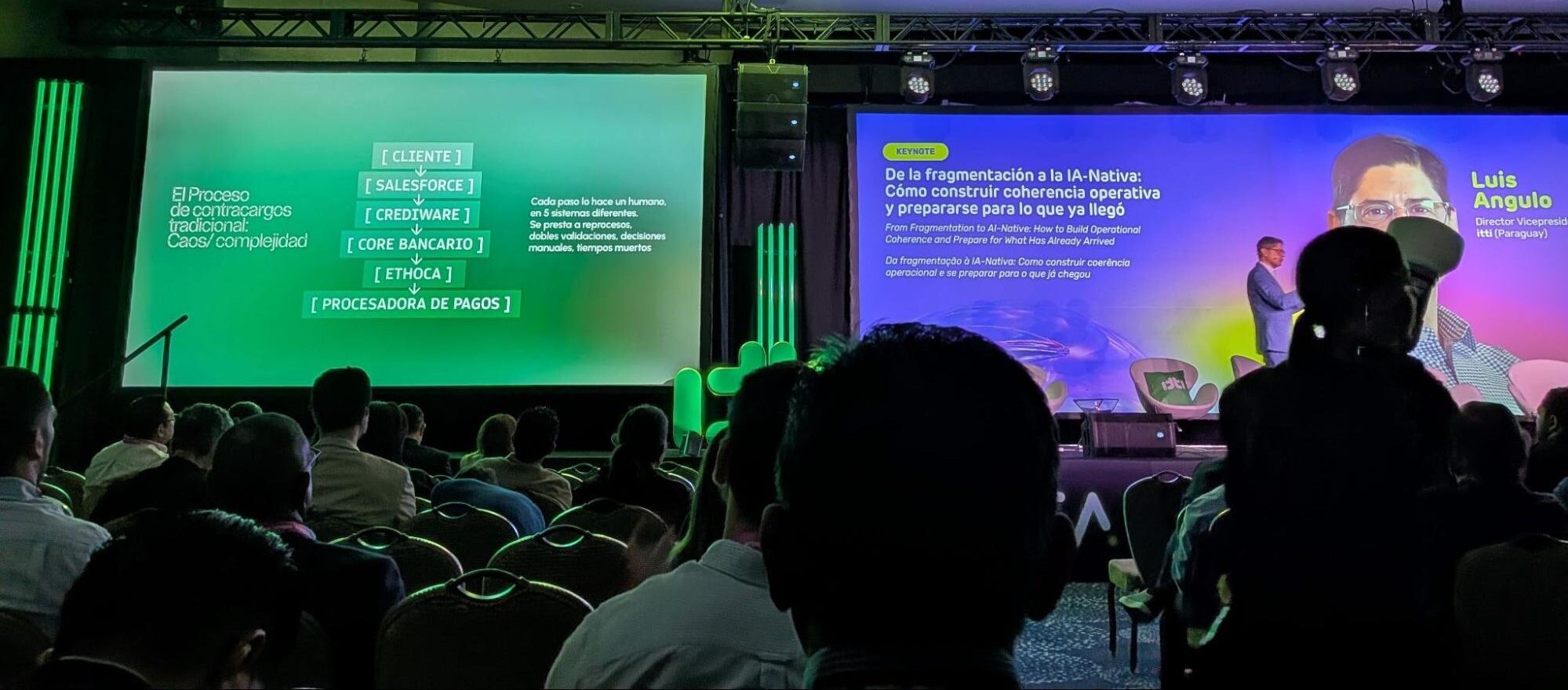
From Fragmentation to AI-Native: How to Build Operational Coherence and Prepare for What Has Already Arrived (Luis Angulo)
AI Modernization for Banking Starts with Understanding Legacy Systems
Banks are trying to connect legacy cores, regulated processes, and modern AI systems without giving up reliability, auditability, resilience, or control. That is the real challenge of AI modernization in banking: making AI useful inside environments where mistakes have operational and regulatory consequences. That production-first framing aligns closely with AgilityFeat’s recent AI content, which emphasizes architecture, execution boundaries, and guardrails over prototype-level excitement.
One of the strongest sessions focused on the brakes and accelerators with these processes. The main point was simple: modernization starts with understanding the current system deeply. AI can help decompose legacy applications, identify duplication, clarify architecture, and support incremental migration instead of risky rewrites. One concrete example: a bank expanded automated test coverage from about 10% to over 70% in just over four weeks using an AI-powered agent, significantly reducing modernization risk.
That same session made clear that modernization is not just technical. In Latin America especially, compliance has to be built in from the start, not treated as a later phase. Culture matters too: fear of replacement, low AI fluency, and resistance to change can slow progress as much as old systems do. The practical advice was solid: understand the landscape, prioritize deliberately, move incrementally, and do not wait for a perfect starting point.
Trustworthy AI in Banking Depends on the Infrastructure Around the Model
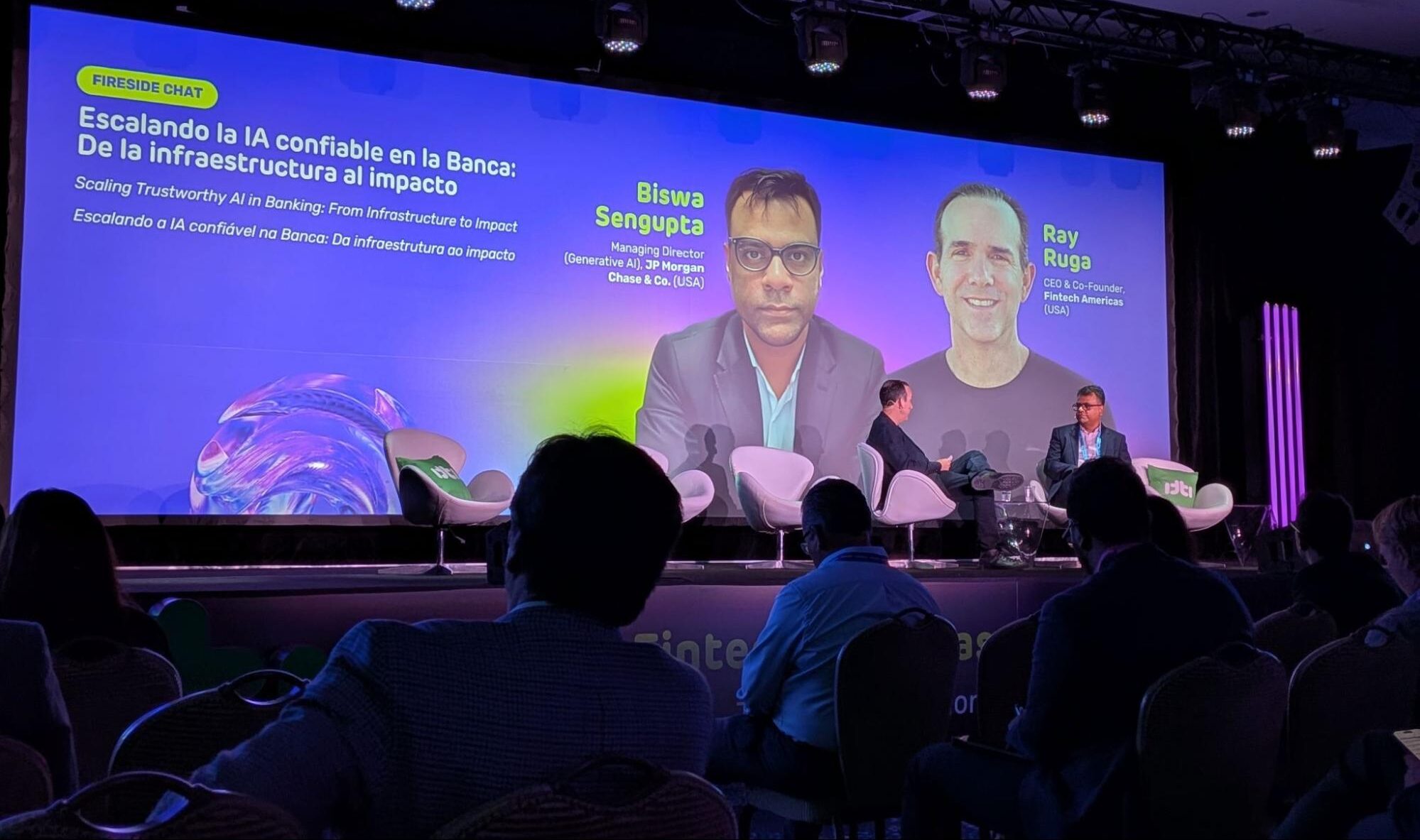
Scaling Trustworthy AI in Banking: From Infrastructure to Impact (Biswa Sengupta and Ray Ruga)
Another strong theme came from the sessions on trustworthy AI in banking, including insights from JPMorgan and other financial leaders featured at the conference. The core message was that serious AI adoption depends less on the model itself and more on the infrastructure around it: secure data access, orchestration, governance, and internal controls. Without that foundation, even strong models remain disconnected from the real workflows that make them useful.
The conversation on trustworthy AI also reinforced a more disciplined view of value. ROI does not come from broad AI claims. It comes from measuring whether concrete workflows are faster, safer, or more effective. Just as important, adoption is as much a change-management problem as it is a technical one. Tools alone do not drive transformation; leadership, training, and internal alignment do.
The more interesting idea, though, was their framework for agentic risk based on reversibility of action. If an AI extracts something incorrectly and a human can correct it, that is manageable. If it executes an irreversible transaction or gives wrong information to a customer, the risk becomes much higher. That is a much more concrete and production-useful way to think about agent design in banking and regulated industries in general.
Evals are what make AI agents real
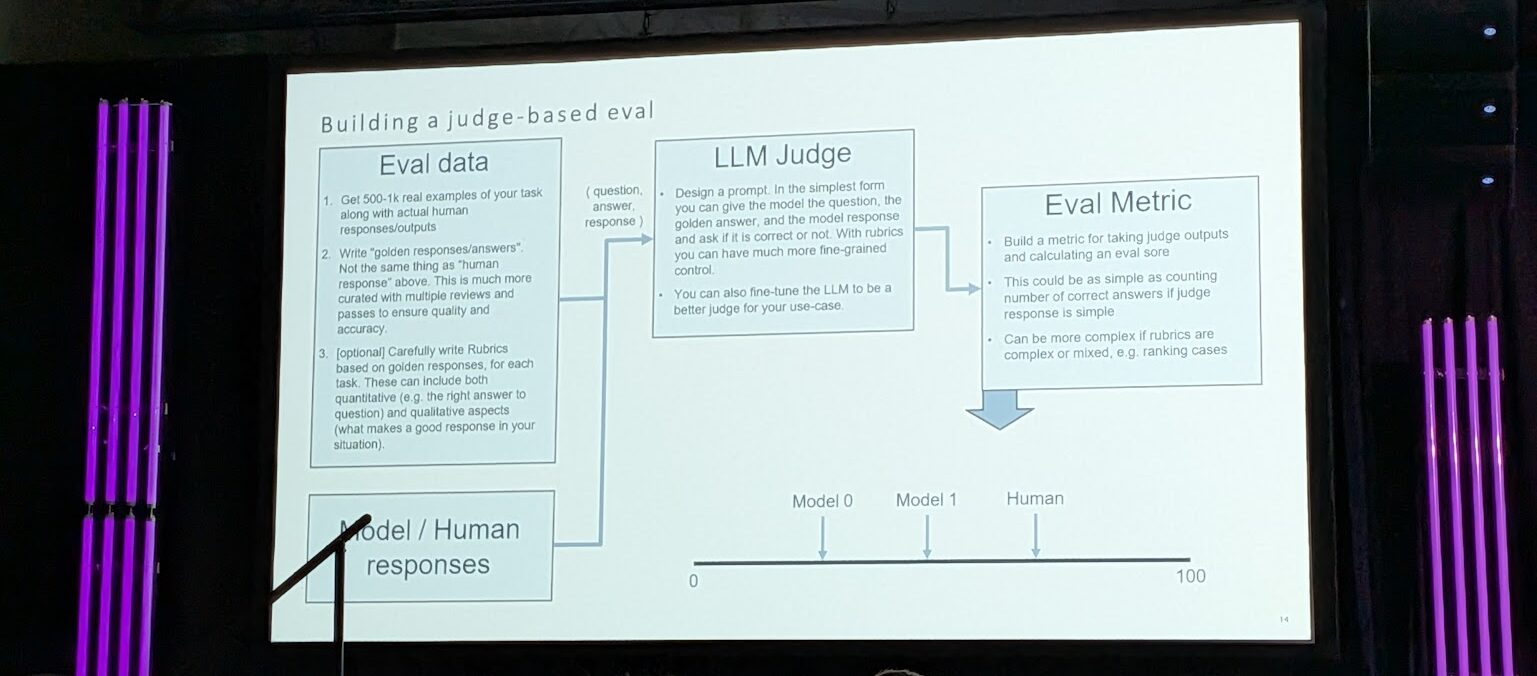
LLMs and Evals: Building reliable AI agents (Rohit Patel)
One of the most technical talks at FintechAmericas was Meta’s session on “LLMs and Evals: Building Reliable AI Agents,” led by Rohit Patel, a director at Meta Superintelligence Labs. It stood out because it brought the discussion back to engineering discipline. Reliable AI agents require evaluation, not just better prompts or bigger models. In banking, evals are part of the control system that separates a compelling prototype from a production-capable application.
Banks do not need more AI pilots
The clearest takeaway from the event was that banking is entering a more serious phase. Institutions are moving beyond AI pilots and into the harder work of integrating AI with legacy systems, sensitive data, internal policies, and real operational constraints. The winners will not be the ones with the most AI demos. They will be the ones that can bridge old infrastructure and new capabilities with the right architecture, guardrails, and operating discipline.
For AgilityFeat, that is where the work gets interesting: helping organizations move from AI demos and pilots to production systems that can actually survive in regulated, high-stakes environments.
Build AI‑Enabled Banking Teams with AgilityFeat
If your institution is moving beyond AI pilots and into AI‑driven modernization, you need teams that can bridge legacy systems and AI‑native workflows.
- Build AI‑enabled teams with AgilityFeat via staff augmentation – embedding senior AI engineers directly into your modernization programs.
- Or use our nearshore team to deliver AI‑driven modernization projects as a service, including AI‑integrated workflows and guardrailed agent systems through our AI integration services
Whether you’re modernizing core banking, payments, or customer‑facing channels, AgilityFeat helps you move from demos to production‑ready AI.
Further Reading:
- Voice AI for Fintech, Healthcare, and Regulated Industries: Architecture for Production Systems
- Why Fintech Companies Choose Java and Go for Critical Backend Systems
- Layered AI Guardrails for Enterprise AI Agents
- How to Hire LLM Engineers: Why Latin America Solves the AI Talent Crisis
- Externalizing Business Rules: Why Choose DecisionRules.io Over Custom Code
- Deploying AI Agents in Production with AWS